
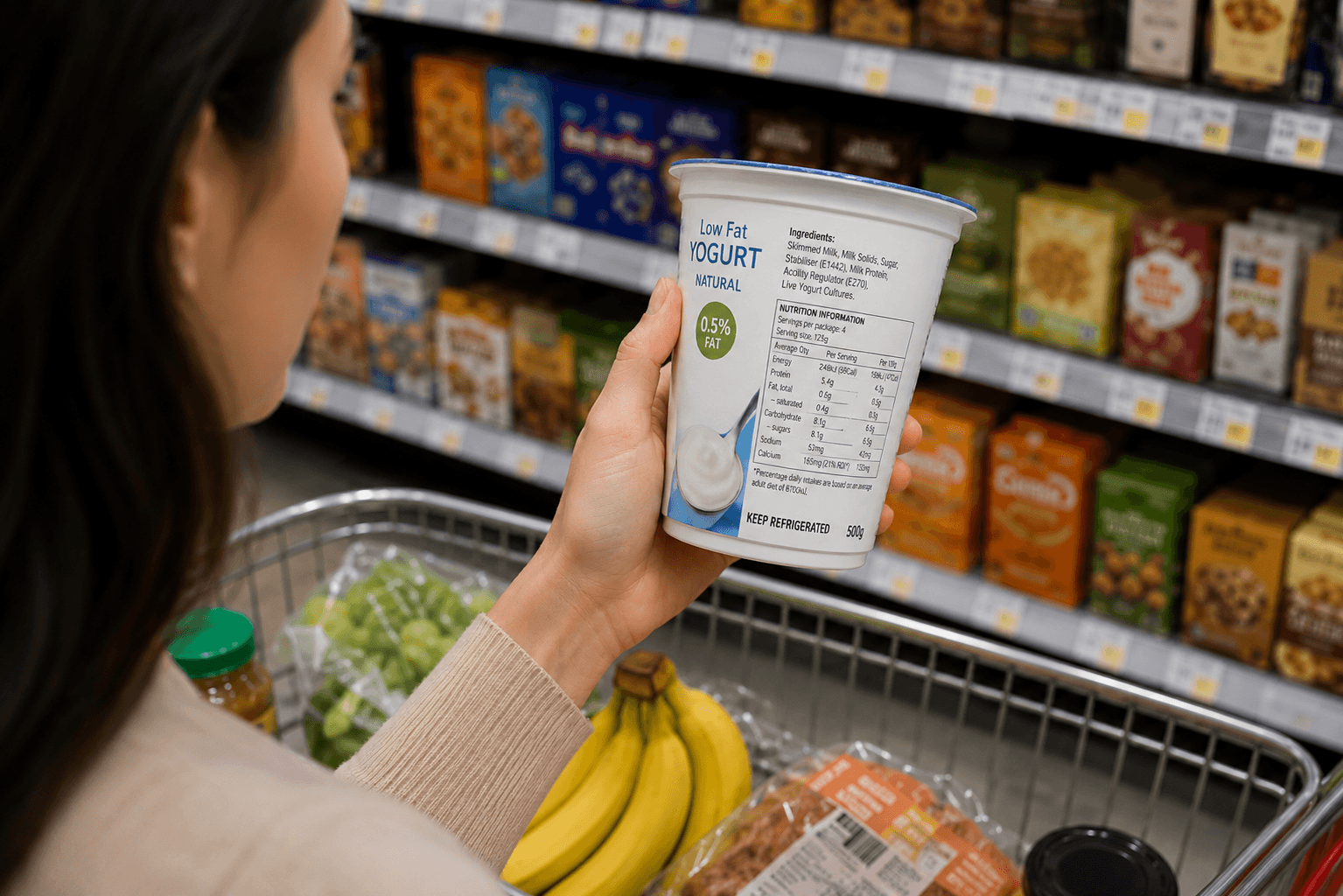
The “Diet” Product That Is Not What It Says
Low-fat yoghurt. Sugar-free biscuits. Diet drinks. The words on the front hide what the ingredients list reveals.
At 5:45 pm in Quatre Barnes, Fareeda stands in the dairy aisle of the supermarket.
She has been trying to eat better for the past month. Less sugar. Less fat. More vegetables. She has made changes at home and feels good about them.
Now she is choosing yoghurt. She picks up the one that says “Light 0% Fat” in large letters on the front. Next to it, she places a box of biscuits marked “Sugar Free.” A bottle of diet cola. A loaf of bread that says “Wholemeal” in green lettering.
She reads every front label carefully.
She does not turn a single product around.
At home, she eats the yoghurt as a snack, gives the biscuits to her children, and feels confident she has made the right choices.
She has not. But she has no way of knowing it.
What This Really Means
Across Mauritius, people who are trying to improve their diet reach for the same products:
∙ low-fat yoghurts and low-fat spreads
∙ sugar-free biscuits and sugar-free drinks
∙ products labelled “natural,” “light,” or “wholemeal”
∙ bread that appears simple but carries a long list of additives
The intention is always the same: to make a better choice.
But the front of a package is designed to sell. Only the back of the package tells the truth.
The Everyday Habit — Trusting the Front of the Package
When fat is removed from a product, the taste changes. The food becomes bland. To fix this, manufacturers add sugar, starch, or flavouring. A low fat yoghurt often contains more sugar per serving than a regular yoghurt. The fat has gone, but what replaced it is worse.
When sugar is removed, the same problem appears. The product needs sweetness, so artificial sweeteners are added. The label now reads “sugar-free.” But the body is not so easily deceived. The sweet taste still arrives on the tongue, and research suggests that for some people, the body responds as though real sugar has arrived, preparing to process sugar that never comes. Over time, this repeated mismatch contributes to increased cravings for sweet food.
Bread tells a similar story. A loaf that looks simple: brown, wholesome or labelled “wholemeal”, may contain added sugar, preservatives, emulsifiers, and colouring agents that make white flour look brown. The word “wholemeal” on the front does not always mean the bread is made entirely from whole grain. Only the ingredients list shows what is actually inside.
The pattern is the same across every product category: when one thing is removed, something else is added to compensate. The front of the package announces what was taken out but It never reveals what was put in. The cycle becomes:
Person tries to eat better → reaches for “diet” products → trusts the front label → does not read ingredients → consumes hidden sugar, additives, or sweeteners → body receives little benefit → person believes they are eating well → health does not improve → frustration → repeat
This cycle is particularly damaging to people who are trying to eat better. The person who buys a “diet” product is making an effort. But the effort is directed at the wrong information.
Start Today
- Turn every product around before it enters the trolley. Read the ingredients list, not the front la
- Ingredients are listed in order of quantity. If sugar, glucose, fructose, or syrup appears in the first three ingredients, the product is likely to be high in added sugar
- Choose plain yoghurt over flavoured or “light” yoghurt. Add your own fruit at home. You control the sweetness
- If a biscuit says “sugar-free,” check what replaced the sugar. If the ingredients list is long and difficult to read, the product is heavily processed
- Choose bread with short ingredients lists. Real bread needs flour, water, yeast, and salt. If the list contains more than six or seven items, the bread is more processed than it appears
- Water is always a better choice than any diet drink. Nothing needs to be removed or replaced when nothing was added in the first place
The healthiest food in any supermarket has no label at all. It is the fruit, the vegetables, the eggs, the lentils. The more a product needs to tell you it is healthy, the more reason you have to check whether it is.
THE IDEA BEHIND
Health literacy is understanding how daily habits shape health over time. Understanding gives people the freedom to make informed choices. Informed choices, repeated daily, become a healthy way of living.